
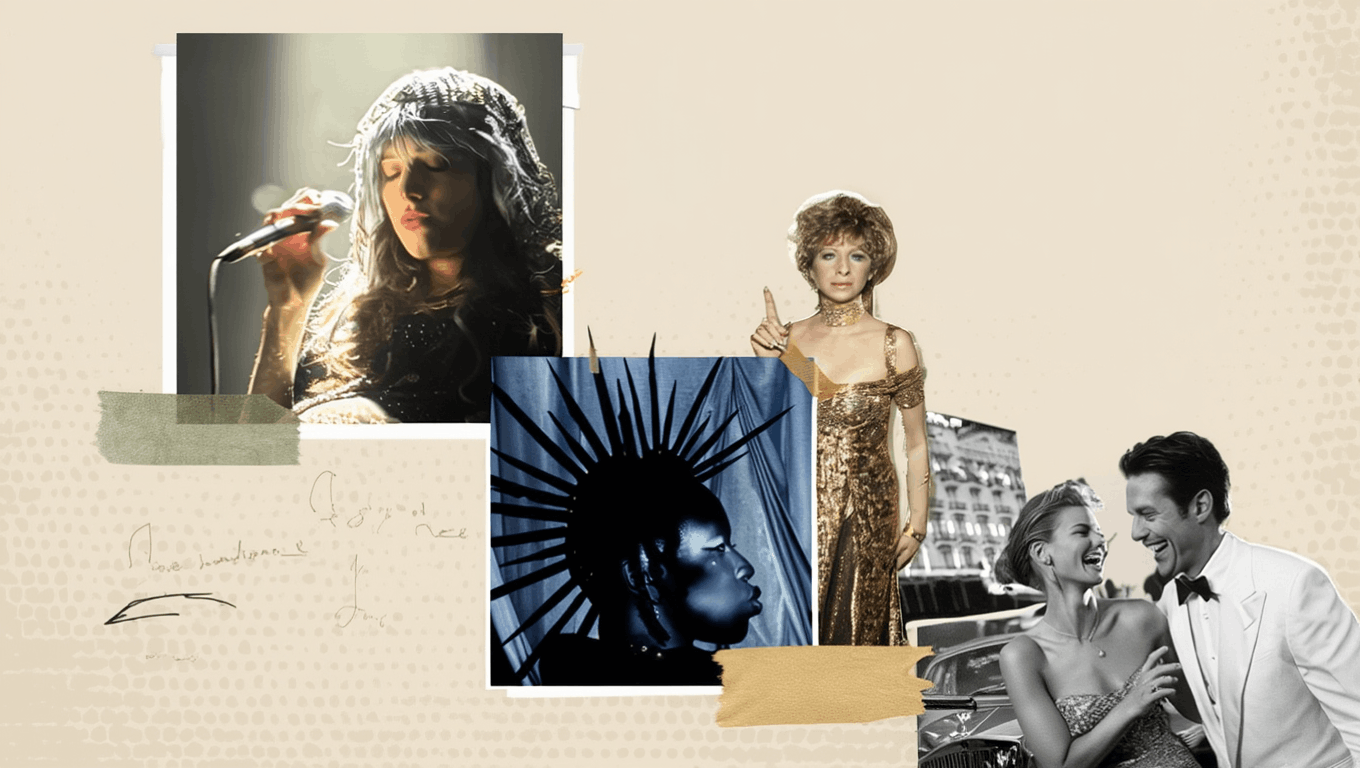
Barbra Streisand receives an Honorary Palme d’Or. A musical about the AIDS crisis in downtown New York competes for the top prize. The most glamorous red carpet in the world opens on May 12. Here is why Cannes 2026 belongs on your radar.
There is a specific kind of glamour that only exists in the south of France in May. It is not the glamour of the Met Gala, which is controlled and curated and happens inside a building most people will never enter. It is not the glamour of a stadium concert or a fashion week show. It is something more cinematic than all of those, literally cinematic, because it happens on the steps of the Palais des Festivals in Cannes, in the evening light that falls on the Croisette in a way that makes everything look like it was shot by a great cinematographer, and it has been happening every May since 1946.
The 79th Cannes Film Festival opens on May 12 and runs until May 23. Eleven days on the French Riviera where film, fashion, music and the particular kind of beautiful excess that only the Mediterranean in late spring can produce all converge in one place simultaneously.
Fashion Soundtrack has always been most interested in the moments where those worlds stop being separate. Cannes 2026 is full of them.
The most important one starts with Barbra Streisand.
She will receive an Honorary Palme d’Or at this year’s festival, joining Peter Jackson as the two figures being recognised for lifetime contributions to cinema. Streisand is the only person in history to have received Academy Awards, Emmy Awards, Grammy Awards and Tony Awards, the full EGOT, alongside the Presidential Medal of Freedom, the French Legion of Honour and now the Palme d’Or. She is a singer who became an actress who became a filmmaker who became a cultural institution so vast and so enduring that no single category can contain her.
She is also, specifically, a Fashion Soundtrack figure. Her visual identity across six decades, the particular way she has always used clothes, hair, makeup and presence as a unified artistic statement, is inseparable from her music. The Funny Girl era. The A Star Is Born era, where she co-wrote and produced and starred in and scored one of the most significant films about music and identity ever made. The Yentl era. The way she has always known that what you wear and what you sing are the same conversation, just in different registers.
Receiving the Honorary Palme d’Or at Cannes is the appropriate recognition for someone who has always refused to be one thing. It is the French cinema establishment acknowledging what Fashion Soundtrack has always known, that the most interesting artists are the ones who cannot be categorised. She will be walking the red carpet with John Travolta.
The competition lineup this year is dominated by auteur filmmakers from across the world, Asghar Farhadi, Pedro Almodóvar, Hirokazu Kore-eda, Paweł Pawlikowski, Ryusuke Hamaguchi. The kind of programme that reminds you why Cannes exists and why no other festival has ever quite replicated what it does.
The film that interests Fashion Soundtrack most is The Man I Love by American director Ira Sachs. Described as a musical fantasia of a city under duress, it is set in New York during the late 1980s AIDS crisis and stars Rami Malek as a downtown artist. The downtown New York of the late 1980s, the clubs, the music, the fashion, the particular energy of a creative community responding to catastrophe with art, is one of the most important cultural moments of the twentieth century and one of the most underrepresented in mainstream cinema. The AIDS crisis shaped everything that came after it in fashion, music, art and culture. A musical fantasia set in that world, competing for the Palme d’Or at Cannes, is exactly the kind of film Fashion Soundtrack exists to talk about.
Also in competition is La Bola Negra, a Spanish film from the directors of Holy Camp exploring queer desire through three eras, 1932, 1937 and 2017, with a cast that includes Penelope Cruz, Glenn Close and the Spanish musician Guitarricadelafuente. A musician in a major Cannes competition film, playing a character whose story spans a century. The crossover between music and cinema that the festival has always been built on made explicit in the cast list.
Two French artists have been confirmed for the opening ceremony. Theodora, the rapper who won at the Victoires de la Musique this year and delivered four sold-out shows at the Zénith in Paris this spring. And Oklou, a writer, composer, performer and musician who appeared at Coachella and is among the most streamed French artists in the United States. Their presence at the opening ceremony signals something about where French music and French culture are right now, internationally minded, genre-fluid, unwilling to be contained by any single category.
What most people do not know about Cannes is that the music industry has been meeting there every year since 1966. MIDEM, the Marché International du Disque et de l’Edition Musicale, held its 60th anniversary edition at the Palais des Festivals earlier this year. The same building. The same Croisette. The music industry and the film industry sharing a city and a building and a coastline for six decades, each pretending the other does not exist quite as much as it should.
And then in August, three months after the last film premiere, the same beach at the Palais des Festivals becomes the stage for Les Plages Électroniques, a three day electronic music festival celebrating its 20th anniversary in 2026 with Martin Garrix, Amelie Lens and Marshmello playing to a crowd with their feet in the sand facing the Mediterranean. The same sand. The same sea. A completely different sound.
Cannes understands something that most cities do not. That film and music and fashion and the specific quality of light at 8pm in May on the French Riviera are not separate experiences. They are one experience, happening in the same place, year after year, since 1946.
The fashion on the Croisette will be extraordinary as it always is. Cannes red carpets are different from Met Galas and Oscars because they happen multiple times across eleven days rather than once. Each premiere its own fashion moment, each night a new set of looks, the cumulative effect more like a fashion festival than a single event. The brands that dress the Croisette know this. The musicians and artists who attend know this. The light knows this.
Cannes has always been the place where film and fashion and music stop being separate conversations. The Honorary Palme d’Or for Barbra Streisand is the clearest statement of that this year, an award given to someone who has always understood that singing and acting and dressing and directing are all the same impulse expressed through different forms.
The festival opens May 12. Fashion Soundtrack will be there.