
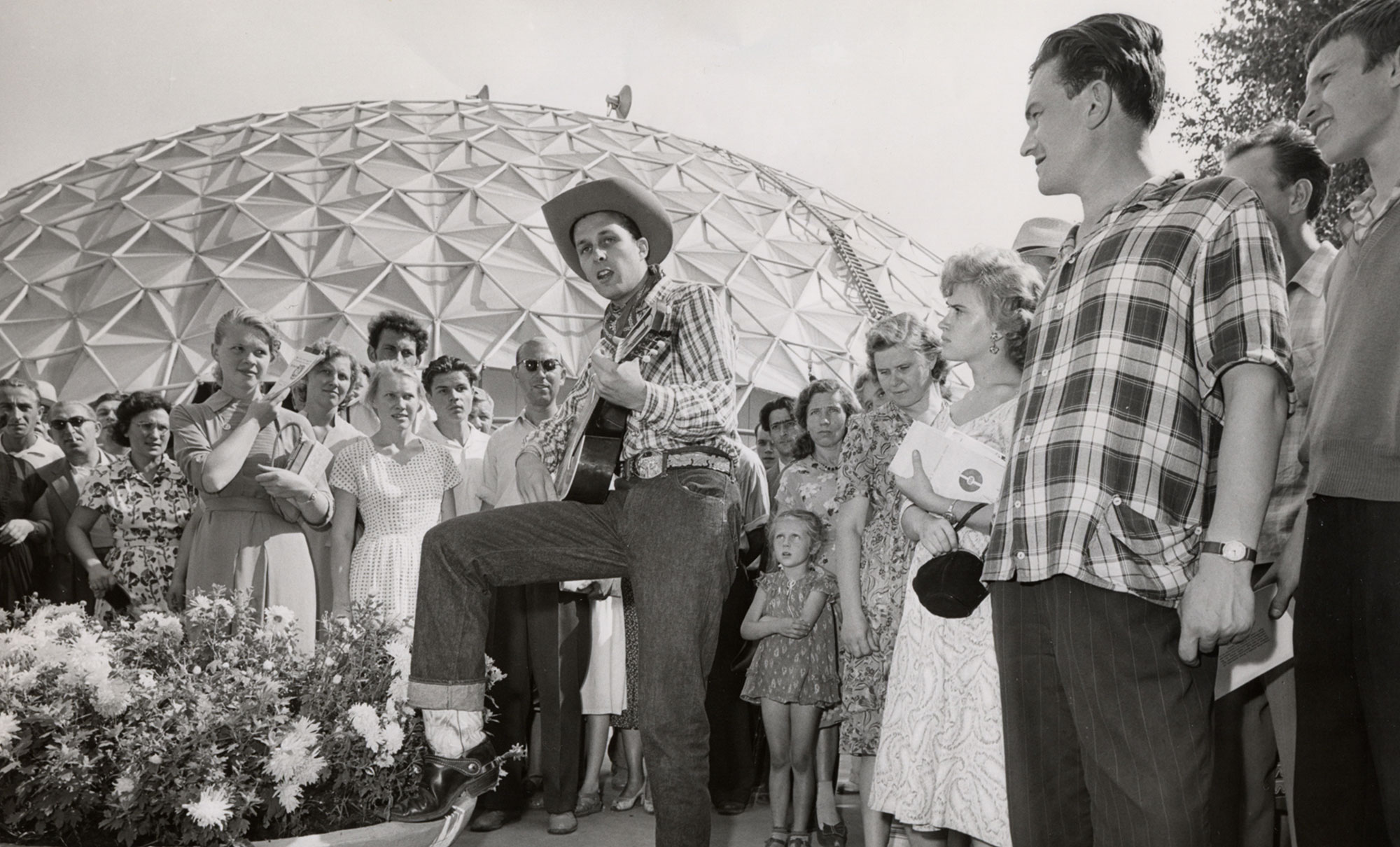
Levi’s isn’t tied to one genre, one era, or one type of artist.
From classic rock icons to modern hip-hop stars, the same pair of jeans has been worn, reworked, and redefined across decades of music culture.
What makes Levi’s unique is simple: every generation has made it their own.
Rock Icons Who Defined the Look
In the early days of rock, Levi’s became a symbol of rebellion and authenticity.
Bruce Springsteen made denim part of his identity, most famously wearing Levi’s on the cover of Born in the U.S.A.
Meanwhile, The Ramones stripped things back even further:
- Tight, worn-in jeans
- Ripped knees
- No polish, just attitude
Levi’s wasn’t styled. For a deeper look at this era, explore how Levi’s shaped music culture over time.
Grunge Artists and Anti-Fashion
By the 1990s, fashion had shifted and so had the meaning of denim.
Kurt Cobain became an unlikely style icon by rejecting style altogether.
His look often featured:
- Loose, worn Levi’s (especially 501s)
- Faded, distressed denim
- Effortless, thrown-together outfits
Levi’s became the uniform of not trying and that’s exactly why it worked.
We break this down further in our guide to why the Levi’s 501 became the most iconic jean in music history.
Hip-Hop and the Reinvention of Denim
As hip-hop rose in the 90s and 2000s, Levi’s took on a completely different identity.
Artists like Tupac Shakur and Jay-Z helped shape a new look:
- Baggy fits
- Relaxed silhouettes
- Denim paired with bold streetwear
Levi’s became part of a wider cultural movement, one that extended far beyond music.
Modern Artists Keeping Levi’s Relevant
Levi’s never disappeared, it evolved and today’s artists continue to wear denim in new ways.
Figures like A$AP Rocky and Kanye West have blended vintage Levi’s with high fashion and streetwear, keeping the brand relevant for a new generation.
The styling may change, but the foundation stays the same.
How Levi’s Style Changed Across Genres
One of the reasons Levi’s lasted so long is its flexibility.
Different genres shaped denim in different ways:
- Rock: straight-leg, worn-in jeans
- Punk: slim, ripped, customised fits
- Grunge: loose, distressed, anti-fashion
- Hip-hop: baggy, oversized silhouettes
The same brand with completely different identities.
Recreate the Look
If you want to capture these styles:
- Classic Levi’s 501 → timeless rock and grunge look
- Relaxed or loose-fit denim → hip-hop-inspired styling
- Black slim jeans → punk influence
The key is making it your own, just like the artists did.
Final Thoughts
Levi’s didn’t become part of music history by staying the same.
It became iconic because it adapted, moving from rock to rap, from rebellion to reinvention.
And through it all, one thing stayed consistent:
The artists wearing them made the jeans matter.
Want the full story? Read our breakdown of Levi’s in music history.
Or explore why the Levi’s 501 became the defining jean across generations.